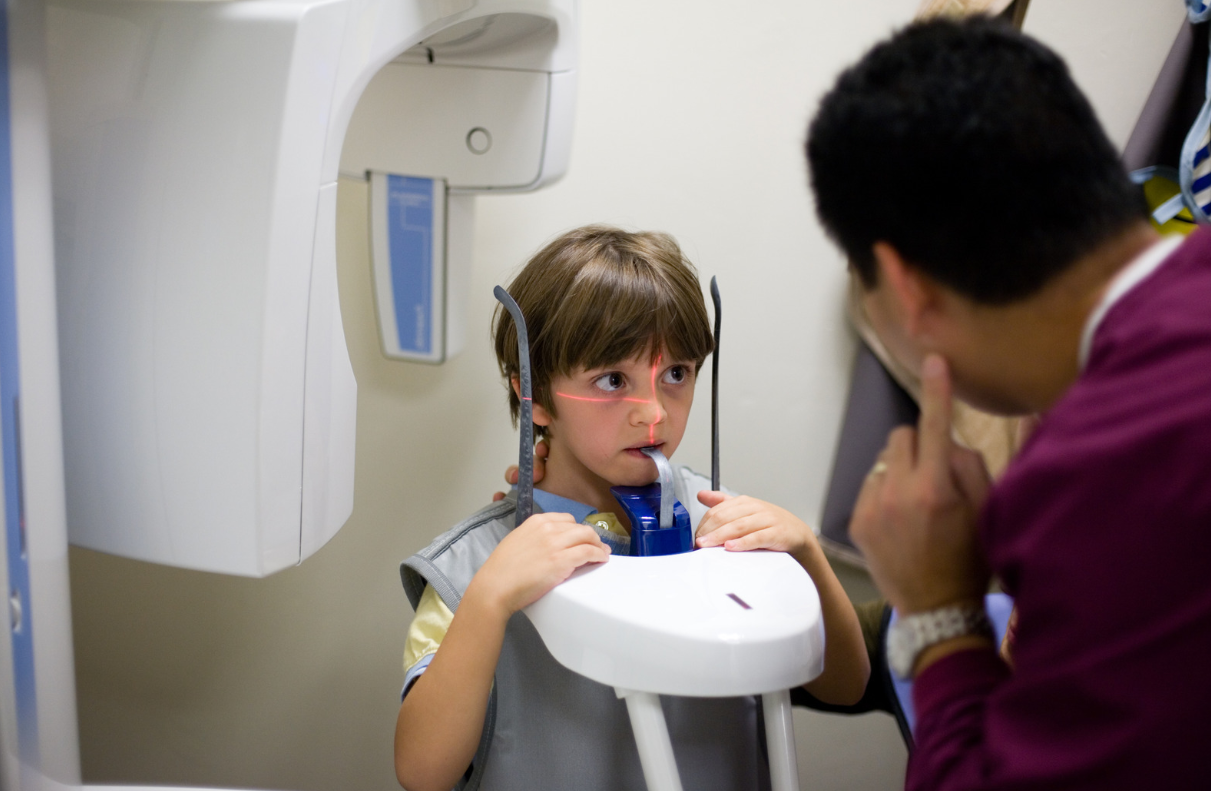
Yes, dental X-rays are very safe for children when advanced digital systems, proper protective shields, and careful clinical guidelines are followed. In reality, today’s low-dose tool has made dental imaging a routine, low-risk part of quality pediatric dentistry for millions of kids every year.
If you are worried before letting your child get an X-ray at the dentist, that reaction is completely normal. Radiation sounds scary, particularly when it comes to kids. But when you know how advanced dental care actually works and how tiny the exposure really is, it becomes a lot simpler to see why dentists rely on X-rays so often.
In this article, we will discuss the real safety numbers, when X-rays are actually required, and what to expect at your child’s next dental checkup.
More Details About X-ray Safety!
Digital X-ray systems reduce radiation exposure by up to 90% as opposed to older film-based technology. This significantly improves the safety of digital dental X-rays compared to those used by dentists decades ago. In addition to the low-radiation X-ray technology itself, dentists also use heavy lead aprons and small thyroid collars to protect the rest of a child’s body during imaging. These additional layers of protection make an already low-risk treatment even safer for growing children.
How Much Radiation Do Kids Get From Dental X-Rays?
A regular set of child dental X-rays delivers a very small amount of radiation, roughly comparable to the natural background dose received during a short domestic flight. That is an incredibly small amount in the bigger picture of daily radiation exposure.
It makes sense that some parents are still concerned about long-term exposure, and it’s reasonable to bring this up with your provider. Radiation safety in dentistry has been significantly improved. Dentists are still thoughtful about ordering X-rays only when there’s a genuine clinical reason to do so, rather than as an automatic routine step.
Why Do Dentists Use X-Rays During a Dental Checkup?
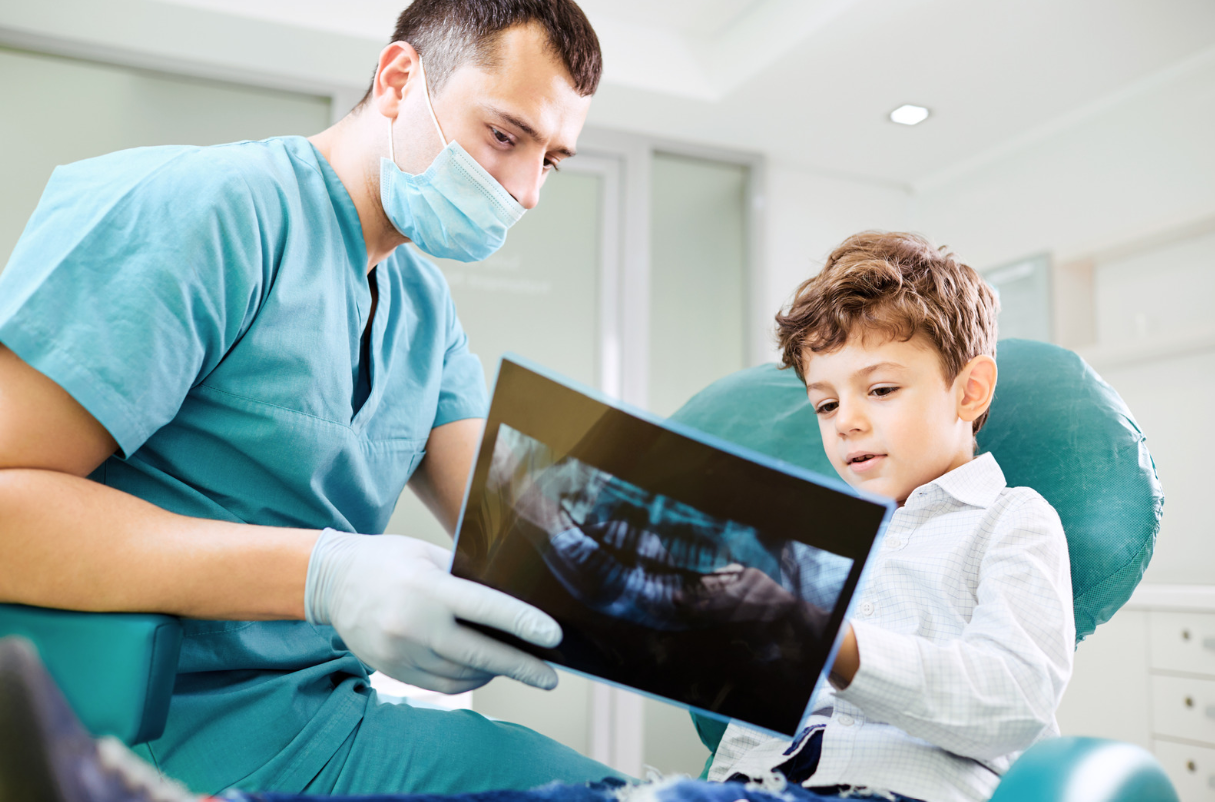
Dentists order X-rays specifically to detect hidden issues that a visual exam cannot detect. This includes identifying cavities between teeth, assessing the growth of permanent teeth behind baby teeth, and checking the general health of the jaw.
This type of cavity detection is important because early-stage decay often hides in spots a dentist can’t see with the naked eye. Detecting it early through preventive dental diagnostics usually means simpler, less invasive treatment in the future, which is a major reason X-rays remain such a valuable part of preventive dentistry.
Types of Dental X-Rays Used for Children
Many different types of child dental imaging exist, each designed to detect a slightly different view of a child’s teeth and jaw.
Bitewing X-Rays
Bitewing X-rays show the upper and lower teeth together in one section of the mouth. They make them especially helpful for spotting cavities between teeth. These are typically the initial X-rays a young child receives.
Periapical X-Rays
Periapical X-rays show the entire tooth from crown to root, providing dentists with a clear view of the root structure and the surrounding bone. This view helps in identifying problems that a bitewing image alone wouldn’t reveal.
Panoramic X-Rays
A panoramic X-ray shows the entire mouth in a single image, including all the teeth, both jaws, and surrounding tissues. Dentists frequently use these to monitor tooth development, spot impacted teeth, or check for cysts.
Occlusal X-Rays
Occlusal X-rays allow you to detect tooth development in a specific location, such as the roof or floor of the mouth. Although they are used less frequently, they are still crucial for diagnosis when necessary.
How Often Should Kids Get Dental X-Rays?
Some kids benefit from routine dental X-rays about once a year, though the exact frequency of dental X-rays depends on individual risk factors. Children who are more likely to have dental decay may require imaging every 6-12 months. However, children with consistently healthy teeth may only require a scan every 12 to 24 months.
A reliable pediatric dentist’s X-ray use policy considers a child’s age, dental history, cavity risk, and whether they have orthodontic appliances such as braces. Your child’s dentist will take all of the information into consideration before suggesting a particular imaging schedule.
Benefits and Risks of Dental Imaging for Kids
Benefits
The benefits of dental X-rays are important because they help a kid’s dentist detect cavities, evaluate tooth development, and identify abnormalities long before they’d be visible during a regular exam. This type of early tooth screening frequently leads to simpler treatment and better, long-lasting results.
Risks
That said, it’s fair to weigh a few small risks too. Repeated radiation exposure can accumulate over time, and young kids sometimes need retakes if they have trouble staying still during imaging. There’s also a small chance of an allergic reaction to certain materials used in certain types of X-ray. Discussing these factors openly with your provider helps ensure dental safety stays a priority alongside diagnostic accuracy.
FAQs
Should kids get X-rays at the dentist?
The American Academy of Pediatric Dentistry suggests a child’s first bitewing X-rays. When the back teeth start to touch, the surfaces between them can no longer be seen on a visual exam. It helps you to detect hidden cavities that wouldn’t otherwise be visible.
What age should children have dental X-rays?
Some children get their first dental X-ray between ages 3 and 4. However, the exact timing depends on unique demands. A few kids may require earlier imaging if there are signs of tooth decay or developmental concerns.
Is an X-ray safe for a 5-year-old?
For some kids, dental X-rays increase cancer risk by only a very small amount. If at all, that risk increases with repeated exposure to radiation. It is unlikely that a child who got a few dental X-rays will be at much greater risk.
How many dental X-rays are too many for a child?
There’s no set universal number, because it depends on a child’s individual risk factors and dental history. Dentists follow guidelines that balance diagnostic needs against radiation exposure, ordering X-rays only when there’s a real clinical reason.
Do digital X-rays use less radiation than traditional ones?
Of course, digital X-rays reduce radiation exposure by up to 90 percent as compared to older film-based X-ray technology. This makes modern imaging safer for children than the X-rays used decades ago.
Final Thoughts
Dental X-rays remain the safest and most effective method in pediatric dentistry, enabling early diagnosis of cavities, developmental problems, and other undetected dental issues with very low radiation exposure. When paired with thyroid collars, lead aprons, and careful, needs-based scheduling, current imaging keeps children safe while still detecting issues early.
At SmileCove Pediatric Dentistry, we use simple, low-dose digital X-ray technology and only suggest imaging when it actually improves your child’s oral health. Every session is built around honest communication and pediatric care that prioritizes your child’s comfort.
If it’s time for your child’s next checkup or you are worried about your child’s dental X-ray safety, you can schedule a consultation with us right now.
Smile Cove Pediatric Dental

Smile Cove Pediatric Dental
Gentle, Fun & Expert Pediatric Dental Care
Schedule an Appointment